Folarin Balogun’s Red Card Controversy: What Happened Next?
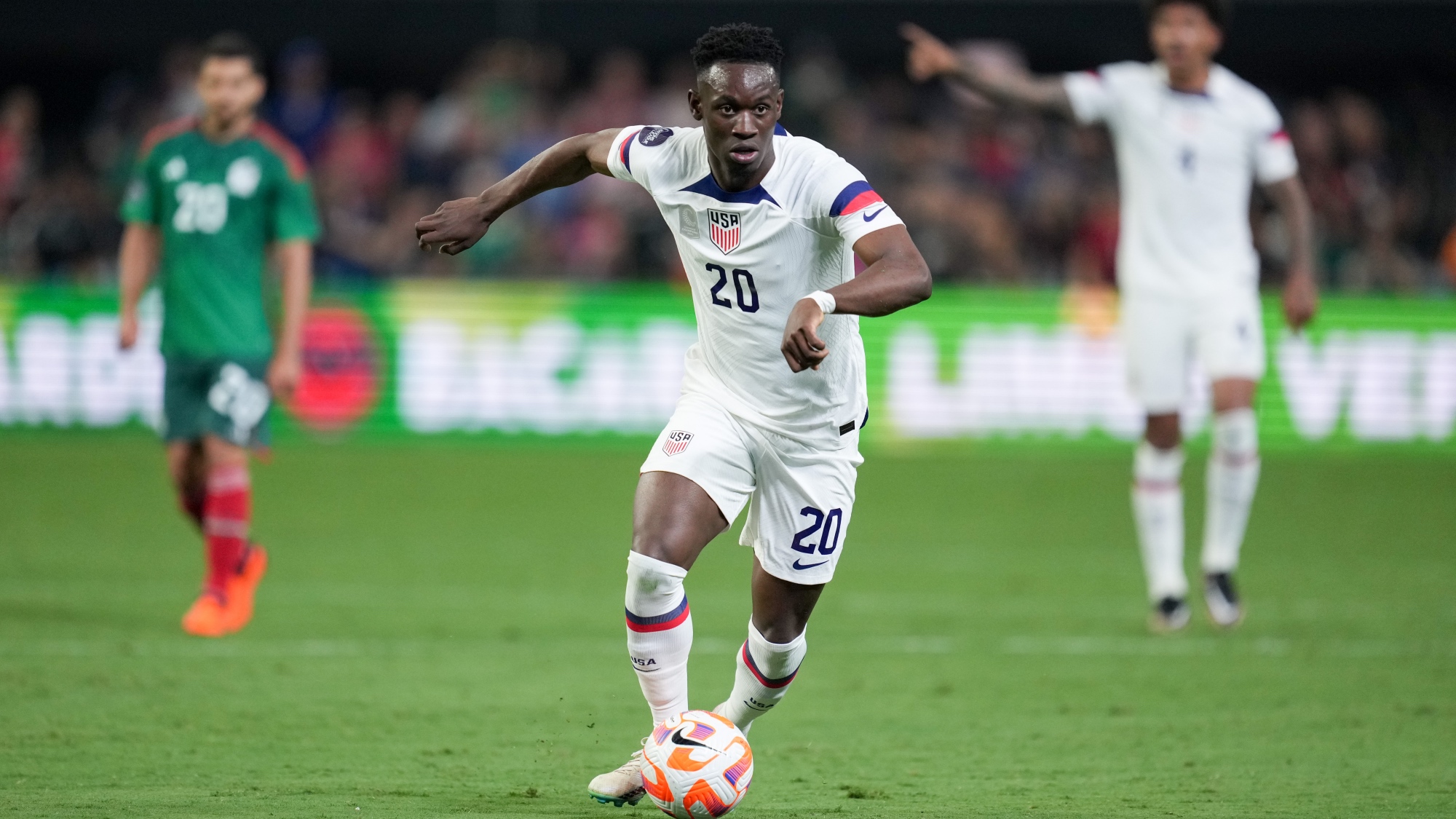
In a surprising twist of events, Folarin Balogun’s red card during the U.S. men’s national team’s victory over Bosnia-Herzegovina has ignited a whirlwind of discussions in USA football news. Initially expected to face a one-game FIFA suspension in accordance with World Cup rules, the striker’s fate took an unexpected turn. After a controversial review of the incident where Balogun was penalized for stepping on a defender’s ankle, FIFA controversially decided to suspend the suspension for a year. This unprecedented decision has stirred excitement among fans as Balogun is set to appear in the crucial Belgium match preview, highlighting how the rules of the game can change in an instant. Only time will tell how this ruling affects the dynamics of international football and the upcoming matches.
The unfolding saga of Folarin Balogun’s controversial sending-off encapsulates a significant moment in the realm of competitive football. Faced with the prospect of missing an important fixture, the young striker found himself at the center of an intense scrutiny on FIFA’s disciplinary protocols. With the suspension lifted, Balogun’s participation in the match against Belgium marks a pivotal shift in expectations for the U.S. squad. This incident not only brings to light the complexities of disciplinary actions within FIFA’s governance but also emphasizes the often unpredictable nature of football, especially during a high-stakes tournament like the World Cup. As anticipation builds for the upcoming clash, fans are eager to witness how this drama unfolds on the pitch.
Folarin Balogun’s Controversial Red Card
The recent red card issued to United States men’s national team striker Folarin Balogun during the match against Bosnia-Herzegovina sent shockwaves through the football community. In a crucial moment, as Balogun attempted to challenge for the ball against defender Tarik Muharemović, he inadvertently stepped on the defender’s ankle. This incident, which was reviewed by officials, led to an immediate ejection as Balogun was shown a red card following the review. Such decisions can drastically impact a game’s outcome, and this was no exception as it raised questions about the fairness of officiating in crucial matches.
Under FIFA’s World Cup rules, a red card automatically results in a one-match suspension, a policy designed to uphold the integrity and discipline of the sport. The circumstances surrounding Balogun’s suspension became increasingly murky with the subsequent decision by FIFA to revoke the suspension. Such inconsistencies not only create hurdles for teams in tournament play but also spark debates about the application of FIFA’s disciplinary actions, making this event a focus of intense scrutiny among fans and analysts alike.
The Impact of FIFA’s Suspension Reversal
FIFA’s decision to suspend Folarin Balogun’s automatic one-game suspension stunned many in the football world, especially with the timing so close to the United States’ Round of 16 match against Belgium. Following a direct appeal that included interventions from high-profile figures like President Trump, FIFA utilized Article 27 of its Disciplinary Code, facilitating a revision of the red card’s impact. This marks a very rare instance within World Cup history, where a red card suspension was overturned—a point that could set a precedent for future cases.
The US Soccer Federation expressed satisfaction with this unexpected turn of events, emphasizing their focus on preparing for the critical match against Belgium. They thanked FIFA for their reconsideration and took the opportunity to rally the U.S. fanbase ahead of this significant encounter. On the contrary, Belgium’s officials expressed disbelief over FIFA’s ruling, questioning the integrity of the disciplinary process and expressing concern over the equality of treatment for all teams at the World Cup.
World Cup Rules and Disciplinary Actions
The intricacies of FIFA’s disciplinary standards, including its World Cup regulations, come into sharp focus when analyzing situations like Balogun’s. Under FIFA rules, any player receiving a red card is subject to an automatic suspension, which serves to deter unsportsmanlike conduct and protect player safety. Concerns were raised by Belgium’s coaching staff regarding the application of Article 66.4, which supports the notion that a red card should lead to an immediate suspension, highlighting the inconsistencies that can arise in governance.
FIFA’s processes are typically viewed as transparent, but the decision to reverse Balogun’s suspension introduces complexities that could invite further scrutiny. This situation underscores the critical nature of adhering to established protocols, particularly in high-stakes environments like the World Cup. Fans and analysts alike will be watching closely to see how FIFA handles similar cases in the future, as variability in enforcement could undermine the competition’s fairness.
The Fallout from Balogun’s Eligibility to Play
Folarin Balogun’s reinstatement ahead of the match against Belgium not only excited U.S. soccer fans but also raised concerns about fair play and competitive integrity. Balogun’s return to the pitch following a potentially controversial suspension could create tension among rival teams and supporters who may feel the process was compromised. The apprehensions from Belgian officials capture this sentiment, suggesting that such reverse rulings may disrupt the established order of competitive sport, particularly when stakes are higher than ever during the World Cup.
The U.S. men’s national team, now armed with Balogun’s skills and energy, prepares for what is likely to be an intense showdown against Belgium. However, the atmosphere leading up to this match is rife with debate over the implications of FIFA’s ruling. This incident, while beneficial to Balogun and his teammates, opens a Pandora’s box regarding the consistency of FIFA’s disciplinary actions, as other teams may now feel justified in seeking similar interventions should they experience unfair treatment.
FIFA Suspension Policy Under Scrutiny
FIFA’s suspension policy is a fundamental aspect of maintaining discipline within international football. However, the recent decision to overturn Folarin Balogun’s red card raises critical questions about how these rules are applied in practice. With appeals seemingly gaining traction under certain circumstances, it prompts a closer examination of the criteria used by FIFA’s disciplinary committees. Critics argue that such inconsistencies could lead to unfair advantages and a decline in the competitive integrity of the World Cup.
As discussions about rewriting or refining these guidelines begin to emerge in both media and sports circles, stakeholders from various national teams, including Belgium, are likely to push for greater accountability in FIFA’s decisions. Players, coaches, and fans demand transparency and fairness, particularly when decisions like Balogun’s can dramatically affect the tournament’s outcomes. The evolution of FIFA’s disciplinary framework in response to these pressures will certainly be a focus for fans and analysts in future competitions.
Analysis of FIFA’s Disciplinary Code
FIFA’s Disciplinary Code is comprehensive and intended to govern the conduct of players, ensuring that the game is played fairly. Yet, the paradox presented in Balogun’s case suggests that there may be loopholes that organizations can exploit. Article 27, which provided the basis for Balogun’s suspension reversal, appears contingent on various interpretations, stirring debate among football associations worldwide. Given that suspensions usually follow strict guidelines, questioning their reliability opens dialogue about the need for uniformity in enforcement.
Moreover, the significant public interest in this high-profile incident exemplifies the importance of FIFA ensuring their code evolves to meet the demands of modern football. As the conversation around transparency and accountability gains momentum, the FIFA Disciplinary Code may require a reevaluation to accommodate the intricacies of contemporary sports governance, ensuring that similar situations are handled moving forward.
The Role of Political Influence in FIFA Decisions
Folarin Balogun’s situation has highlighted the intriguing intersection of sports and politics, particularly through the involvement of President Trump in advocating for the reversal of his suspension. Such instances demonstrate how political influence can seep into sports governance, potentially altering outcomes that fundamentally govern fair competition. Critics warn that this may open the floodgates for political intervention in sports decisions, risking the integrity of governing bodies like FIFA and the perceived neutrality that should accompany their rulings.
The role of public figures in affecting sporting decisions may also raise ethical questions regarding the relationship between sports organizations and government officials. The potential for favorable treatment based on political connections poses challenges in maintaining a level playing field. As fans and analysts speculate on the implications of this intervention, it remains to be seen how FIFA will navigate the complexities introduced by such external pressures in future instances.
Fan Reactions to Balogun’s Red Card Scenario
The fan reactions to Folarin Balogun’s red card and subsequent reinstatement have varied widely, reflecting the passionate and often polarized nature of football fandom. Many U.S. supporters celebrated the turnaround, viewing it as a triumph over an unjust penalty that could have severely hindered their team’s World Cup aspirations. These passionate fans rallied behind Balogun, emphasizing the importance of maintaining the best players on the pitch when competing at the highest levels.
Conversely, international supporters, particularly from Belgium, expressed outrage at what they perceive as favoritism from FIFA, further intensifying the rivalry between the teams. Social media platforms have become battlegrounds for debate, with fans voicing their opinions on the fairness and integrity of the tournament. As the match approaches, these discussions could lead to heightened emotions as both teams take to the field, magnifying the conflict surrounding FIFA’s disciplinary actions.
Looking Ahead: The Match Against Belgium
As the United States prepares for their critical match against Belgium, the inclusion of Folarin Balogun adds a layer of complexity to the anticipation. His ability to influence the game positively by scoring or assisting goals is vital, especially as both teams strategize for success based on recent form and the pressure of World Cup competition. The repercussions of his earlier red card saga will linger in the minds of fans and players alike, adding extra motivation to perform against a challenging opponent.
This clash represents more than just a knockout stage game; it embodies the overarching narratives of sportsmanship, justice, and competitive spirit. The stakes are high, not only for the players on the pitch but also for the integrity of the World Cup itself. Both teams will be seeking to capitalize on their respective advantages while navigating through the emotions built up from the developments surrounding Balogun, setting the stage for an unforgettable encounter.
Frequently Asked Questions
What does the Folarin Balogun red card mean for his availability against Belgium?
Despite receiving a red card in the match against Bosnia-Herzegovina, Folarin Balogun will be available to play against Belgium. His automatic one-game suspension, initially expected to sideline him, has been temporarily lifted following a review by FIFA.
How did FIFA respond to the Folarin Balogun red card incident?
FIFA initially imposed a one-game suspension on Folarin Balogun after his red card but later suspended the enforcement of this penalty. This decision was based on Article 27 of FIFA’s code of discipline, allowing for a probationary period of one year.
What was the reaction to Folarin Balogun’s overturned red card suspension?
The decision to overturn Folarin Balogun’s red card suspension was met with mixed reactions. U.S. Soccer welcomed the ruling, while officials from Belgium expressed shock, citing contradictions with FIFA’s Disciplinary Code and questioning the integrity of the decision.
Can a player appeal a red card suspension under World Cup rules?
According to FIFA’s regulations, players cannot appeal red card suspensions. This was confirmed following Folarin Balogun’s incident, where FIFA officials reiterated that the ruling on his red card was final before the recent reversal.
What precedent exists for FIFA lifting a World Cup red card suspension like Folarin Balogun’s?
The lifting of Folarin Balogun’s suspension is extremely rare; it is only the second instance known in FIFA history. The last comparable case was Brazil’s Garrincha, who had his suspension overturned prior to the 1962 World Cup final.
What impact did President Trump’s involvement have on Folarin Balogun’s red card case?
President Donald Trump reached out to FIFA President Gianni Infantino about Folarin Balogun’s red card suspension. Following this, FIFA announced the suspension of the penalty, with Trump publicly thanking FIFA for what he described as a reversal of injustice.
What is Article 66.4 of FIFA’s Disciplinary Code regarding red cards and suspensions?
Article 66.4 of FIFA’s Disciplinary Code states that a red card automatically results in a suspension for the next match. This article has raised questions among officials regarding the propriety of FIFA’s decision to lift Balogun’s suspension.
How did Folarin Balogun’s red card incident affect U.S. Soccer’s preparations for the Belgium match?
Following the decision to permit Folarin Balogun to play despite his red card, U.S. Soccer was able to focus fully on their upcoming match against Belgium, with optimism about having their striker available to compete.
| Key Point | Details |
|---|---|
| Folarin Balogun Red Card Incident | Balogun received a red card after stepping on a defender’s ankle during a match against Bosnia-Herzegovina. |
| Automatic Suspension | The red card mandated a one-game suspension per FIFA rules. |
| FIFA’s Ruling | FIFA suspended Balogun’s one-game suspension for a year, allowing him to play against Belgium. |
| Reversal Influences | President Trump requested FIFA to review the decision, and FIFA complied. |
| Criticism from Belgium | Belgium officials criticized the decision as unjust and contradictory to FIFA’s rules. |
Summary
Folarin Balogun’s red card became a significant talking point in the lead-up to the match against Belgium. Initially facing a one-game suspension due to a foul during a previous match, the ruling was overturned by FIFA after a controversial review process. This rare reversal, influenced in part by requests from U.S. officials, stirred up debate among teams and observers, particularly in light of FIFA’s own disciplinary regulations. As Balogun prepares to play in this crucial match, the implications of the red card incident continue to resonate, highlighting the complexities and stakes involved in international football regulations.